
Service Lines Built for Long Rural Runs
Water Line and Sewer Line Installation in West Fork for new homes, mobile home placements and rural lots with long distances from the meter to the structure
Rural acreage lots around Greenland and Winslow often place new homes or mobile homes hundreds of feet from the road, which means the water and sewer service lines must be trenched, laid to code depth and grade, and connected before the structure can be occupied or utilities activated. Boyd Septic & Utility LLC trenches from the meter to the house, installs the service line to the depth and slope required by local plumbing code, and connects it at the structure, leaving interior plumbing to a licensed plumber. You get a continuous buried line that meets inspection requirements and handles the full run from the utility connection to the foundation.
The crew digs the trench to the depth the local code requires—typically deeper in areas where frost penetration or rock ledges affect layout—lays the water or sewer pipe along the correct slope, installs fittings at the meter and foundation penetration points, and backfills the trench once the line is inspected. Interior plumbing connections inside the structure are completed by a licensed plumber after the exterior service line is in place and approved.
Ask whether the quote includes trenching, pipe, fittings, backfill and connection at the house to confirm the scope.
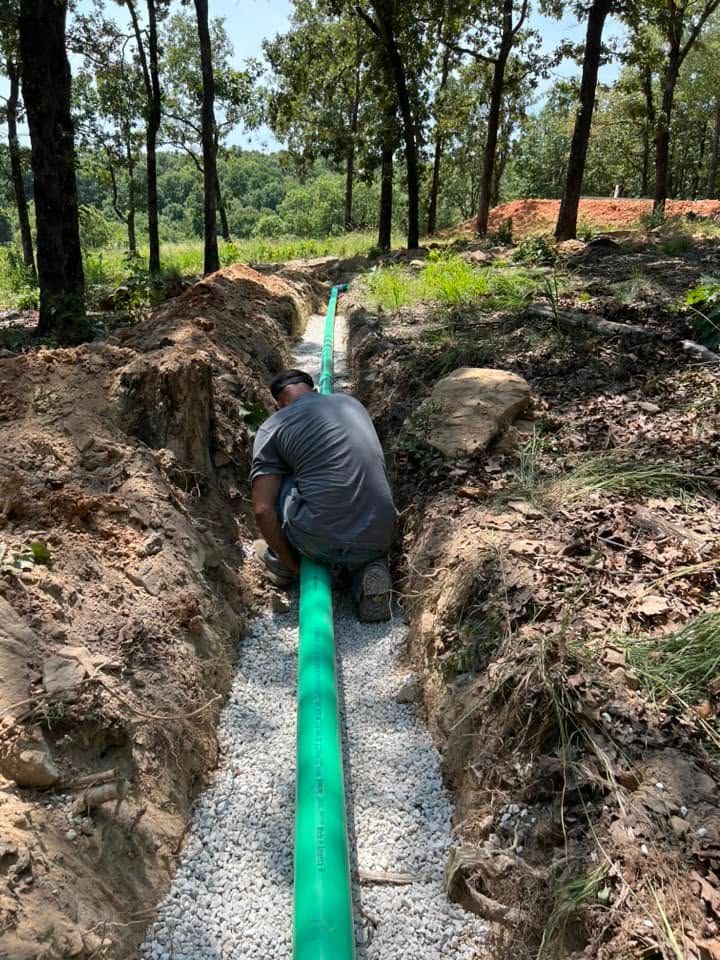
How Service Line Work Is Sequenced
The trench is cut from the meter or main tap to the foundation, avoiding existing septic field areas, driveways, or landscape features that should not be disturbed. The owner holds a water and sewer service line installer license and a restricted plumbing license, and the work follows the grade and depth standards the local jurisdiction enforces during inspection.
Once the line is connected and backfilled, you see a continuous buried run with no exposed pipe, no low spots where water can pool over the trench, and a foundation penetration point ready for the interior plumber to tie into the home's plumbing system. Because the same company often handles septic installation and service line work, the site layout accounts for both systems without scheduling conflicts or duplicated excavation.
The crew carries general liability insurance, and the owner runs the installation personally, so the work follows the same standards whether the lot is a quarter-mile run or a shorter suburban connection. Verify what is left for the interior plumber and what the exterior scope includes before the trench is opened.
Answers About Service Line Installation
New homes on rural acreage in West Fork are often set back from the road to preserve privacy or take advantage of topography, which increases the service line distance and makes proper slope and depth critical to long-term performance.
What depth and slope does the service line require?
Local plumbing codes typically specify minimum trench depth to prevent freeze damage and a minimum slope to maintain gravity flow for sewer lines; the installer adjusts both based on the distance, elevation change, and soil conditions along the run.
How is the trench routed from the meter to the house?
The crew maps the straightest practical path that avoids existing septic drain fields, utility easements, driveways, and mature tree roots, then trenches to the code-required depth and lays the pipe along a continuous grade from the meter to the foundation.
What happens at the foundation penetration point?
The service line is brought through the foundation wall or slab at the location the interior plumber specifies, sealed to prevent groundwater infiltration, and stubbed out at a height that allows the interior connection to proceed once framing and interior rough-in begin.
Why does the exterior service line installation stop at the foundation?
State plumbing regulations divide responsibility between exterior utility installation, which requires a service line installer license, and interior plumbing, which requires a separate license; the exterior installer completes the buried line to the structure, and the licensed plumber takes over inside the building envelope.
What should you confirm before the trench is backfilled?
Verify that the line has been inspected and approved by the local jurisdiction, that the slope meets code, that all fittings are secured, and that the backfill material matches what the permit requires—some areas mandate sand or gravel bedding around the pipe before native soil is replaced.
Boyd Septic & Utility LLC also installs water and sewer service lines in Greenland, Winslow, Fayetteville, Springdale and Bella Vista. Call Boyd Septic & Utility LLC at (479) 391-4407 to review your lot layout and confirm what the exterior installation includes.