
Wooded Lots Prepared for the Next Phase
Land Clearing in West Fork for rural acreage that needs a usable building area before septic, driveway or foundation work begins
Rural acreage lots in Prairie Grove and Salem Springs are often wooded and need clearing before a home, septic system or driveway can go in, so the order of clearing matters for where the system can be placed and how the rest of the site preparation unfolds. The owner's own crew at Boyd Septic & Utility LLC does the clearing, and the work is coordinated with the rest of the site preparation so the building area, septic field location and driveway route are all considered before trees are cut. The aim is a clean, usable building area that is ready for grading or the next phase of site work without unnecessary clearing that removes more vegetation than the project requires.
The crew cuts and removes trees and brush from the work area, grubs out stumps where needed for the building footprint or septic drain field, and stages the debris for hauling or disposal. Cleared ground is left ready for grading, utility trenching or foundation layout, and the surrounding tree line is preserved where it does not interfere with setbacks, access or the absorption area. The sequence of clearing is shaped by where the septic system will be located, because the drain field requires a larger cleared area than the house footprint and must avoid slopes, rock outcroppings and wet zones.
Arrange a property walkthrough to identify clearing limits and coordinate the work with your septic and driveway layout.
Why Clearing Sequence Matters for Site Layout
Clearing the entire lot before the septic location is finalized often means removing trees that could have stayed, or leaving stumps and root masses in areas that later need excavation for the drain field or driveway base. Coordinating the clearing with the site plan allows the crew to focus on the building envelope, the septic absorption area and the access route while leaving the rest of the vegetation intact to control erosion, define property lines and maintain privacy from neighboring parcels.
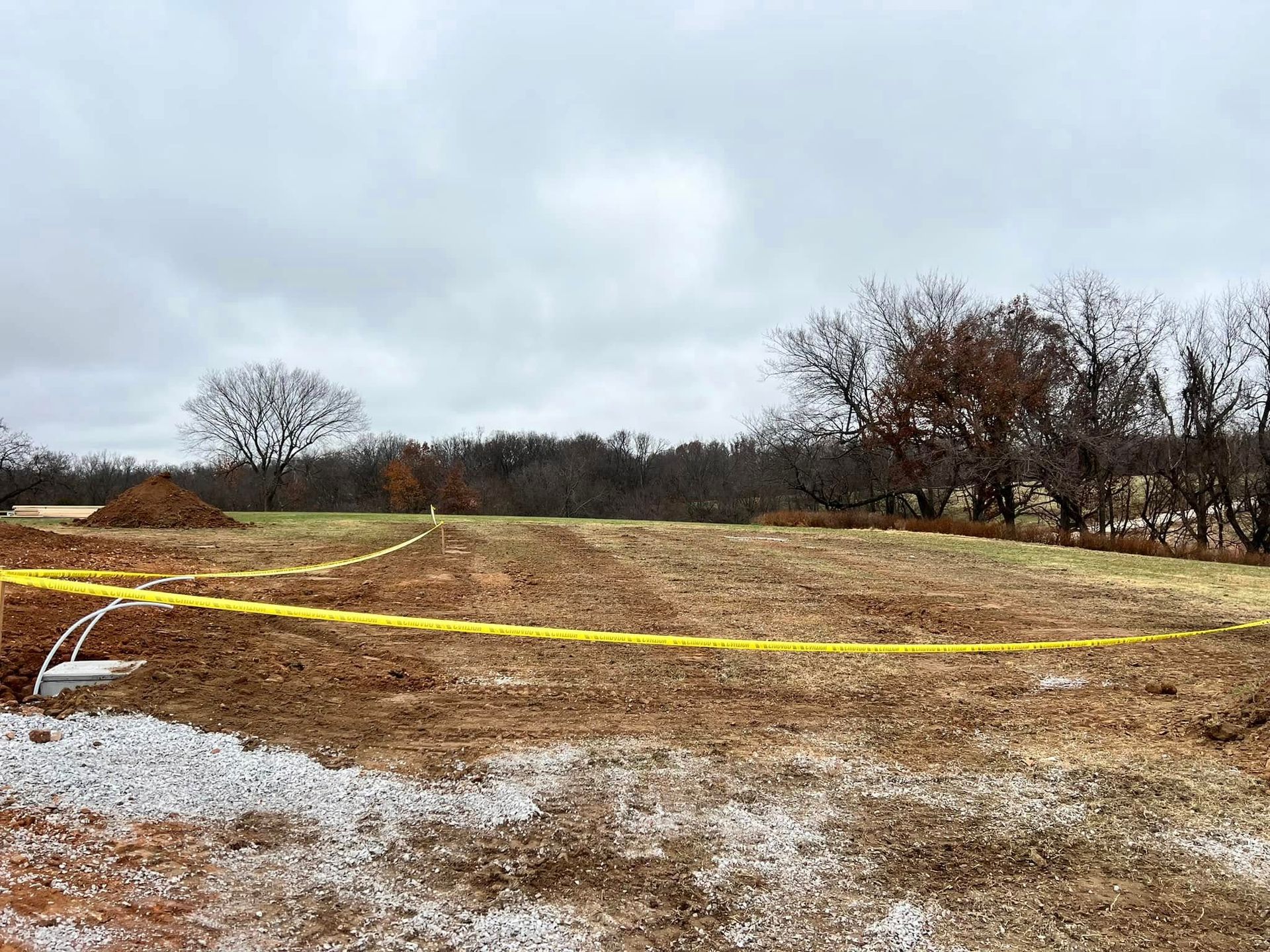
After clearing, the work area is free of standing trees, major brush and stumps that would interfere with grading or excavation, and the debris is either hauled off or staged in a designated area outside the footprint. The ground is rough but accessible, and the boundaries of the cleared zone are visible so the next crew knows where grading, trenching or foundation work will occur.
Land clearing includes cutting and removing trees and brush, grubbing stumps from designated areas, and staging debris. Disposal arrangements, erosion control measures and coordination with utility or septic contractors should be confirmed with the office before clearing begins.
What Property Owners Ask About the Work
Clearing wooded acreage in West Fork involves decisions about how much vegetation to remove, what to do with the debris, and how to sequence the work with septic installation and driveway construction, so understanding the process and what the finished clearing provides helps avoid over-clearing or delays in the next phase.
How much of the lot should be cleared before the septic system is installed?
The clearing should include the building footprint, the septic drain field area with room for setbacks and future expansion, and the driveway route from the road to the home site, while leaving the rest of the vegetation in place to control erosion and preserve the natural boundaries of the property.
What happens to the stumps after trees are cut?
Stumps in the building footprint, septic absorption area and driveway route are grubbed out so the ground can be graded to final elevation, while stumps outside those areas can be left in place or cut flush with the ground depending on how the surrounding land will be used.
Why does the crew stage debris instead of hauling it immediately?
Staging allows the debris to be sorted, with usable timber separated from brush and slash, and gives the property owner time to decide whether to sell the logs, chip the brush for mulch or arrange for a debris haul, rather than paying for immediate removal of material that may have value or on-site use.
How does clearing affect the septic system location on a wooded lot?
The location of large trees, rock outcroppings and the natural slope of the land determine where the drain field can be placed without excessive clearing or grading, so the septic contractor and the clearing crew often walk the site together to confirm the absorption area before trees are cut.
What should you check after the clearing is finished?
The cleared area should match the planned footprint for the building, septic field and driveway, the ground should be accessible for equipment and grading work, and any trees left standing near the work area should be protected from damage during excavation or backfill operations.
Boyd Septic & Utility LLC also clears land in Greenland, Winslow, Fayetteville, Springdale and Bella Vista. Contact Boyd Septic & Utility LLC at (479) 391-4407 to schedule a site visit and review clearing limits for your project.