
Access Built for the Lot and the Load
Driveway Construction in West Fork for rural acreage lots with long distances from the road to the home site
Many rural acreage lots in Bella Vista and Springdale sit a long way from the road, which means the driveway is a major part of the build and has to be laid out with the house, septic field and utility lines in mind. The owner's crew at Boyd Septic & Utility LLC handles the grading, base and finish on the property, and driveways are built to suit the lot, slope and the vehicles that will use them. A driveway that works for a passenger car may rut or wash out under a loaded gravel truck or a septic pumper, so the base depth and surface material are sized to the expected traffic over the life of the property.
The crew clears and grades the route, avoiding wet areas, steep grades and conflicts with the septic drain field or utility easements. A compacted base is set to the expected traffic load, with heavier base layers for driveways that will carry construction equipment, delivery trucks or regular service vehicles. The surface is then finished with gravel, crusher run or another material chosen for traction, drainage and durability, and the final grade is shaped so water sheds off the driving surface rather than pooling or eroding the edges.
Schedule a site consultation to review routing options and confirm base requirements for your intended use.
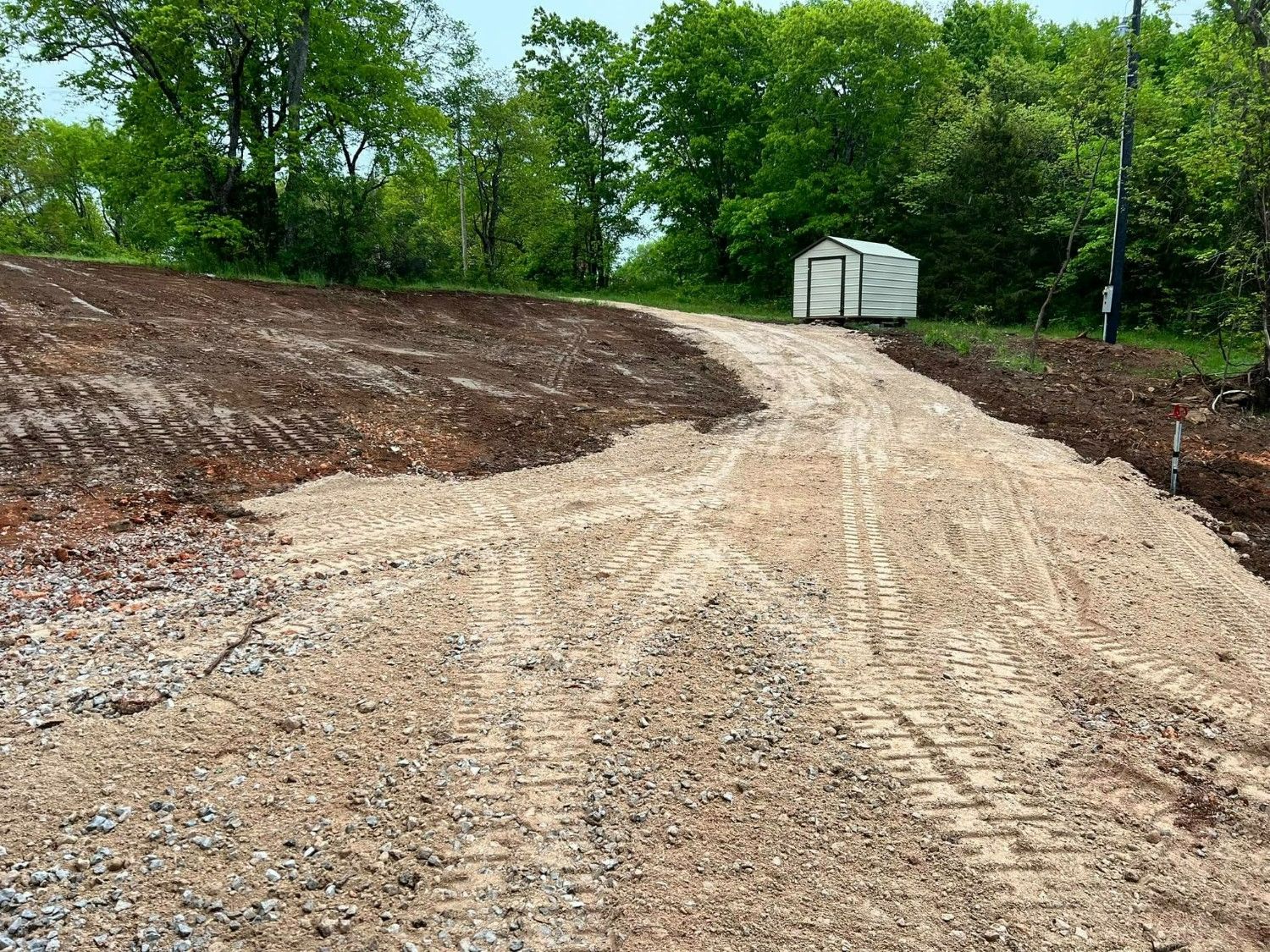
What Separates a Durable Driveway from a Temporary Path
Base depth and compaction determine whether the driveway holds up under repeated use or settles into ruts and soft spots after the first few heavy loads. A shallow base over native soil may look fine when first spread, but it shifts under weight and erodes quickly once rain saturates the subgrade. Proper construction involves removing organic material and soft soil, setting a compacted base that distributes the load, and crowning the surface so water drains to the sides rather than running down the center and washing out the base.
Once the driveway is finished, the surface sheds water during rain, remains firm under vehicle traffic, and holds its shape without developing ruts or washouts along the route. The edges are defined and stable, and the grade from the road to the home site follows a consistent slope that avoids sudden drops or steep climbs that create traction problems in wet weather.
Driveway construction includes clearing and grading the route, setting and compacting the base, and placing the finish surface. Culvert installation, erosion control and coordination with utility line placement are handled separately and should be confirmed before the grading work begins.
Common Questions About This Service
Building a driveway on a wooded or sloped acreage lot involves more than spreading gravel, so understanding how the route is chosen, how the base is sized, and what the finished surface requires helps ensure the driveway holds up under the traffic it will actually carry.
How is the driveway route chosen on a sloped or wooded lot?
The route is laid out to avoid excessive grade, wet areas where the soil stays soft, and conflicts with the septic drain field, well location or utility easements, with curves and clearing kept to the minimum needed for safe vehicle access and turning radius at the home site.
What base depth is needed for a gravel driveway that will carry service trucks?
Driveways expected to carry loaded service trucks, septic pumpers or delivery vehicles typically require a compacted base several inches deeper than a driveway used only by passenger vehicles, because the heavier axle loads concentrate weight and cause faster settling in under-built sections.
Why does the surface need to be crowned or sloped?
A flat driveway surface holds water after rain, which saturates the base, softens the subgrade, and accelerates rutting, while a crowned or cross-sloped surface sheds water to the sides where it drains into the vegetation or a ditch rather than pooling on the driving path.
What happens to the driveway during the first few months after construction?
The base compacts further under traffic and weather, the surface may settle slightly in areas where the subgrade was disturbed, and additional surface material is often added to fill low spots and maintain the crown once the base has fully seated.
How do you maintain a gravel driveway after it is built?
Periodic regrading smooths out ruts and restores the crown, adding fresh gravel replaces material that migrates to the edges or washes away during heavy rain, and keeping vegetation clear of the edges prevents roots from undermining the base and allows water to drain off the surface.
Boyd Septic & Utility LLC also builds driveways in Greenland, Winslow, Fayetteville, Springdale and Bella Vista. Reach Boyd Septic & Utility LLC at (479) 391-4407 to arrange an estimate visit and discuss routing and base requirements for your property.