
Systems Built to Last on Rural Properties
Septic Installation in West Fork for new residential builds and acreage lots without municipal sewer access
Rural acreage lots across Washington and Benton counties were developed long before municipal sewer lines reached most of Northwest Arkansas, which means a properly sized septic system is what makes the home usable from day one. Boyd Septic & Utility LLC runs every install personally with the owner's own crew rather than subcontracting it out, and installs are often finished within a few days on site. The work is done under an Arkansas licensed installer credential, so every tank, distribution box and drain field placement follows state requirements for soil type, setback distances and capacity.
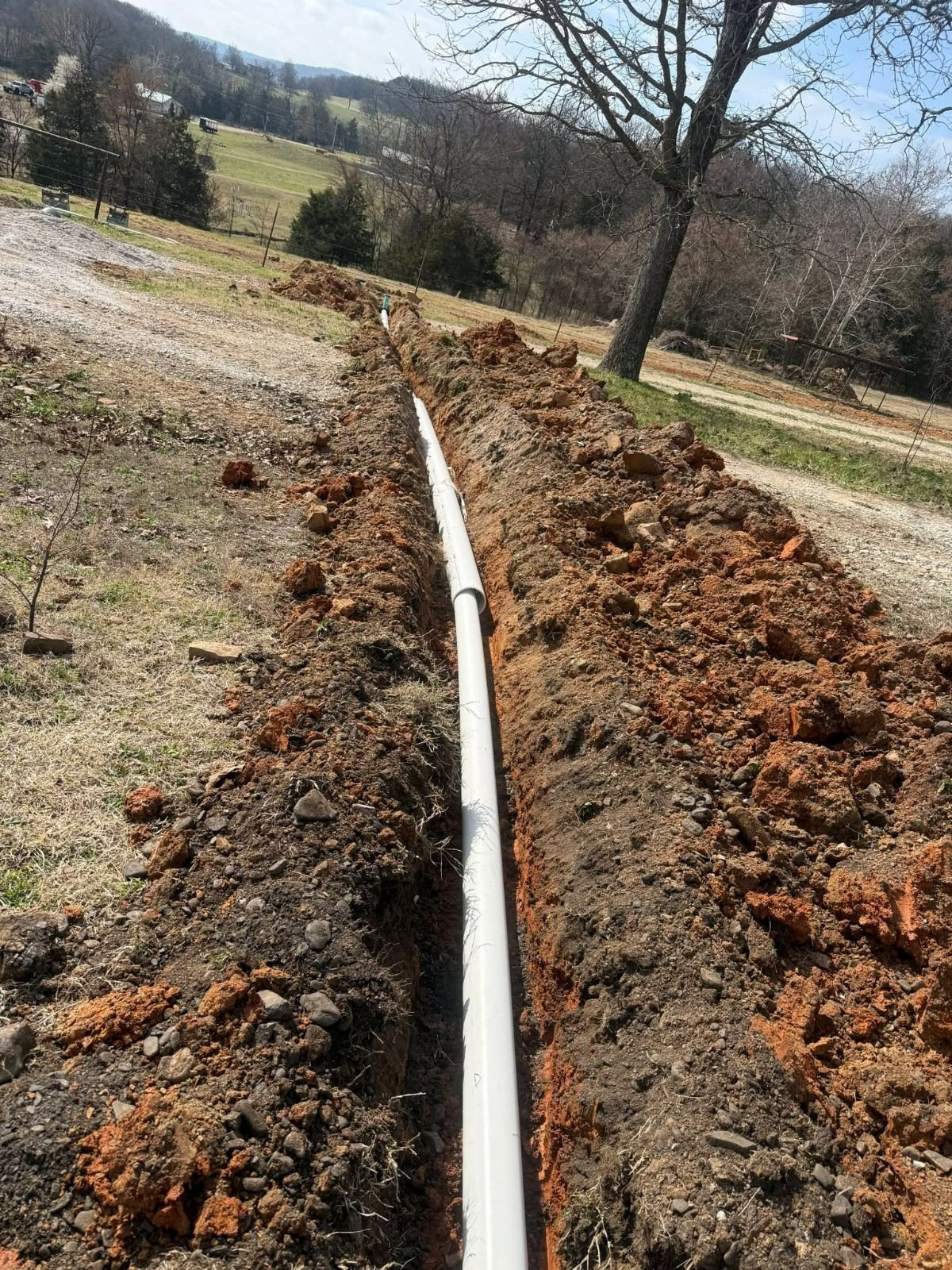
The crew sets the tank, distribution box and drain field to the site layout based on where the house will sit, where the well is located, and how the lot drains naturally. Each component is positioned to meet setback requirements from property lines, wells and surface water, then backfilled and graded so runoff moves away from the absorption area. On new construction projects, the install timeline is coordinated with the foundation and utility rough-in so the system is ready when the home needs it.
Schedule an on-site evaluation to review lot layout and confirm system sizing for your build.
What Proper Sizing and Placement Require
System sizing is determined by the number of bedrooms in the home, not the number of people currently living there, because state code assumes maximum occupancy over the life of the system. A three-bedroom home requires a larger tank and more drain field area than a two-bedroom, even if only one person lives there now. The absorption area is shaped to fit the usable portion of the lot while avoiding slopes, rock outcroppings, wet areas and required setbacks from wells and property lines.
Once the system is in and backfilled, the ground over the drain field settles slightly over the first few months, then stabilizes. You'll notice that the area stays relatively level and vegetation grows back, which is normal and helps prevent erosion. The distribution box and tank access risers remain visible at grade so future service and pumping can be done without excavation.
The install includes setting the tank, running the inlet line from the house, placing the distribution box, laying out the lateral lines in the drain field, and final grading. Septic permits, soil testing and perc test arrangements are handled separately and should be completed before the install is scheduled.
Questions Before Starting Your Project
New construction on acreage lots in West Fork and Greenland often involves coordinating the septic install with clearing, grading and utility line placement, so understanding the sequence and what the finished system requires helps avoid delays once the build starts.
What happens before the crew arrives to install the system?
The lot should be cleared and rough-graded to the planned building elevation, the septic permit should be approved, and the location of the house, well and driveway should be staked so the crew knows where setbacks apply and where the inlet line will run.
How is the drain field sized for the lot?
The size of the absorption area is determined by the soil type, the results of the perc test, and the number of bedrooms in the home, with each bedroom adding to the required square footage of drain field because state code assumes higher wastewater volume over time.
What should you avoid doing over the drain field after the install is finished?
Heavy vehicles, permanent structures, and deep-rooted trees should stay off the absorption area because compaction reduces soil permeability and roots can damage the lateral lines, both of which shorten the functional life of the system.
How long does the installation take on a typical rural lot?
Most installs in West Fork are completed within a few days on site once the permit is in hand and the lot is ready, though timeline depends on soil conditions, rock encountered during excavation, and weather that affects access or grading work.
What do you see once the system is in and operational?
The tank risers and distribution box lids remain visible at or just above grade, the ground over the drain field is restored and seeded, and the inlet line from the house connects to the tank inlet so wastewater flows into the system as soon as plumbing fixtures are installed inside.
Boyd Septic & Utility LLC also installs septic systems in Greenland, Winslow, Fayetteville, Springdale and Bella Vista. Contact Boyd Septic & Utility LLC at (479) 391-4407 to arrange an estimate visit and review your lot layout and system requirements.