Restoring Function to Aging Drain Fields
Septic Repair in West Fork for older rural homes with failing absorption areas and lateral lines
A drain field that no longer absorbs wastewater shows up as soggy ground over the lateral lines, slow drains inside the house, or sewage odor near the tank or distribution box. Boyd Septic & Utility LLC handles repairs personally with the owner's own crew, and the work focuses on restoring the absorption area rather than replacing the entire system. Older rural homes in Elkins and Huntsville without municipal sewer often have aging drain fields that slowly lose capacity as the soil around the lateral lines becomes saturated with solids or the pipes themselves crack and collapse, so the repair targets the section that has actually failed.
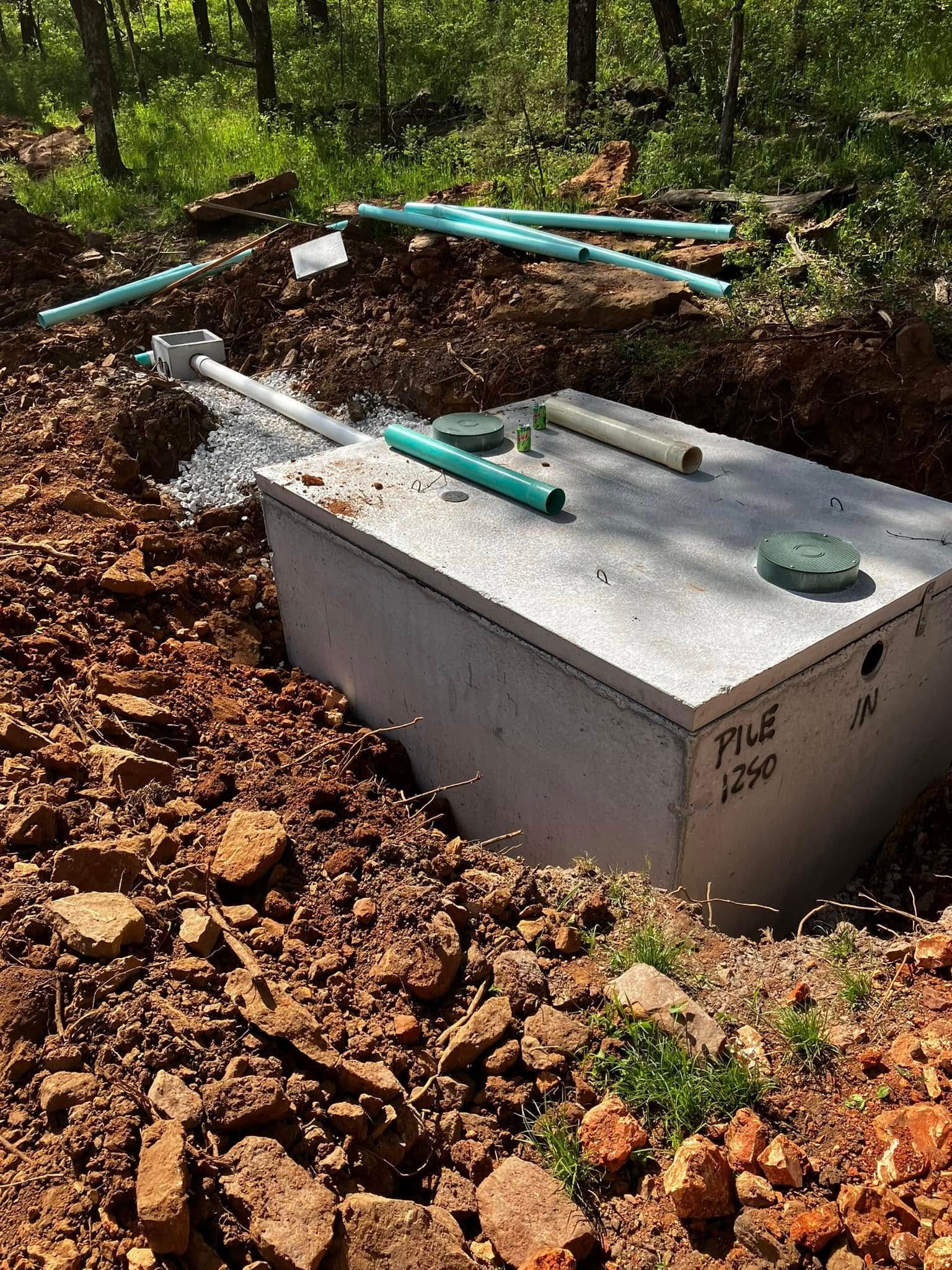
The crew locates the failed drain field or lateral line by checking where the ground stays wet, where effluent is surfacing, or where the distribution box is backing up. Once the damaged section is identified, the affected area is excavated, the old lines or media are removed, and new lateral lines and clean gravel are installed to restore permeability. The grade is then restored so surface water moves away from the repaired area and the rest of the drain field continues to function.
Request an on-site inspection to identify which section of the drain field needs attention.
How Repairs Address Absorption Failure
Drain field failure usually happens in one section first, often the area closest to the distribution box or the lowest part of the field where effluent moves most frequently. The soil in that zone becomes clogged with biomat buildup or the lateral pipes crack from settling, tree roots or heavy equipment driven over the area. Replacing just the failed section restores function without the cost or disruption of a full system replacement, as long as the tank and distribution box are still intact and the rest of the field has usable capacity.
After the repair, the ground over the new lateral lines settles and dries out, drains inside the house run normally again, and the sewage odor near the tank or yard disappears. The repaired section is graded and seeded so vegetation grows back and stabilizes the soil, and the distribution box resumes even flow across all active lateral lines.
Repairs include excavating the failed area, removing damaged lines, setting new lateral pipe and gravel media, and backfilling to grade. Tank pumping, distribution box cleaning and permit requirements should be confirmed with the office before work is scheduled.
Answers About How the Work Is Done
Repairs on older systems in West Fork often involve working around mature trees, uneven terrain and limited access, so understanding what the crew needs to reach the failed area and what gets replaced helps set realistic expectations for the project.
How does the crew locate the failed section of the drain field?
The area where effluent is surfacing, where the ground stays wet even in dry weather, or where the distribution box shows uneven flow between outlet pipes tells the crew which lateral line or zone has lost absorption capacity and needs excavation.
What gets replaced during a typical drain field repair?
The damaged lateral line, the gravel bed surrounding it, and any crushed or collapsed distribution piping are removed and replaced, while the tank, distribution box and any functional lateral lines in other zones are left in place if they still meet code and show no structural damage.
Why does one section of the drain field fail before the rest?
The section closest to the distribution box or the lowest elevation in the field receives effluent most frequently, so biomat buildup or soil saturation happens there first, especially if the tank has not been pumped regularly or if solids have reached the drain field.
What should you do if drains slow down again after a repair?
Slow drains that return after a repair usually mean the tank needs pumping, the inlet baffle is clogged, or another section of the drain field is starting to fail, so a follow-up inspection of the tank and distribution box helps identify whether the issue is upstream of the repaired area.
How long does a repaired drain field section last?
A properly installed repair using clean gravel and new lateral pipe typically restores function for many years, as long as the tank is pumped on schedule, no heavy equipment drives over the area, and the rest of the system continues to distribute flow evenly across all active zones.
Boyd Septic & Utility LLC also repairs septic systems in Greenland, Winslow, Fayetteville, Springdale and Bella Vista. Call Boyd Septic & Utility LLC at (479) 391-4407 to arrange a site visit and review the condition of your drain field.